

Mountain Modern Fence Ideas: Steel, Cedar, Stone & Corten

BarrierBoss Style Guide ·
8 Mountain Modern Fence Ideas for Snow, Wind and Big Views
Mountain modern homes are all about honest materials: dark steel, warm timber, natural stone and a lot of glass pointed at the view. The fence should speak the same language. This guide covers how to design one that looks like it belongs to the house, and how to choose materials that stand up to snow, wind, high-altitude sun and wildfire season in Colorado, Utah, Montana, Idaho and Wyoming.

What You Need to Know (TL;DR)
- Mountain modern fencing borrows the house palette: black or Coffee Brown steel, cedar, stone and Corten, kept simple so the landscape stays the star.
- Use solid privacy panels only where you need them, like the hot tub, patio and side yards, and switch to open black hog wire panels wherever there is a view to keep.
- Design for the weather. Solid fences catch wind and build snowdrifts, open fences let both pass, and every post needs to sit below your local frost line.
- In wildfire country, keep at least the 5 feet of fence closest to the house fully non-combustible. Colorado State Forest Service guidance treats a fence attached to the house as part of the house.
- On acreage, check local wildlife fencing guidance and HOA covenants before you plan the perimeter. Many mountain communities regulate height, material and style.
The Look: What Makes a Fence Mountain Modern
Mountain modern grew out of the classic mountain lodge, then dropped the heavy logs and dark interiors. What is left is a cleaner idea: simple rooflines, big windows, timber and stone used in honest, unfussy ways, and black or weathered metal for contrast. You see it in new builds from Park City to Jackson, Big Sky to Sun Valley, and all along Colorado's Front Range and high country.
A fence on one of these properties has two jobs. It has to frame the house without fighting it, and it has to stay out of the way of the view that probably sold the lot in the first place. That means fewer, better materials, long clean lines, and a clear plan for where the fence is solid and where it opens up.
Steel fits this style naturally. It brings the same crisp, dark lines as a standing-seam roof or black window frames, and it holds its shape through decades of freeze-thaw cycles that crack, cup and twist wood boards. Pair it with cedar and stone and the fence reads as part of the architecture instead of something added later. Browse our full range of metal fencing to see the profiles and frames in this guide.
Built for Mountain Conditions
Mountain weather asks more of a fence than a suburban backyard does. Before you pick a style, plan for four things.
Snow
A solid fence acts like a snow fence whether you want it to or not: wind-blown snow drops out and piles up on the sheltered side. Think about where those drifts will land before you run a solid section across a driveway, walkway or gate. Open hog wire lets most snow blow through and is the easier choice on exposed, windy stretches.
Wind
Solid panels catch wind like a sail and hand all of that load to the posts. On ridgelines, open meadows and wind corridors, keep solid sections short and well supported, and use open panels for the long runs. Steel posts set in proper footings resist wind load and frost heave better than wood posts that soften at the ground line.
Freeze-thaw and frost
Posts set above the frost line get pushed up a little every winter until the fence leans. Frost depth varies a lot from valley floor to high country, so confirm yours with your local building department. If you are racing the season, our guide to fall fence installation before the ground freezes covers timing and post depth.
High-altitude sun
The sun is stronger up high. The World Health Organization notes that UV intensity rises by almost 10% for every 1,000 meters of elevation, which is why stain and paint on wood fences fade so fast in mountain towns. BarrierBoss steel panels carry a factory finish on both sides, so there is no restaining schedule, and Corten has no finish to fade at all.
The Mountain Modern Palette
The palette comes straight from the landscape: bark, granite, snow, dry grass and evergreen. The combinations that work almost every time:
- Midnight Black steel: the backbone of the style. It echoes black window frames and metal roofs, and it makes cedar and stone look warmer.
- Coffee Brown steel: a softer choice for wooded lots, where it blends into tree trunks and timber siding instead of standing out.
- Corten: weathered steel that picks up the rust and gold tones of aspen leaves and scrub oak in fall, and glows against snow in winter.
- Western Red Cedar: warm wood framing that ties the fence to timber beams, soffits and decks.
- Stone gray: granite, river rock and flagstone for piers, walls and paths that anchor the fence to the ground.
Pick one metal color as the lead and let wood and stone support it. Black steel, cedar and gray stone is the classic mountain modern trio. Corten, black and stone leans more contemporary and desert-adjacent, which suits Utah and southern Colorado.
Profile and Orientation
The 7/8" corrugated wave has a relaxed, slightly rustic feel that sits naturally beside board-and-batten, log accents and barn-style outbuildings. The deep-groove ribbed profile has flat faces and crisp shadow lines, which suit flat or low-slope roofs, big glass and concrete. Our comparison of ribbed vs. corrugated metal fence goes deeper.
For orientation, vertical panels echo standing-seam roofs and tall timber posts, and they shed snow and water cleanly. Horizontal panels stretch the eye along long, flat runs and work well beside low ranch-style mountain homes. On sloped lots, which is most mountain lots, vertical panels are usually easier to step down the grade neatly.

8 Mountain Modern Fence Ideas
1. Black steel in a cedar frame
The signature look. Cedar-framed corrugated metal panels give you the warmth of timber with a steel face that will not rot, cup or need stain. Let the cedar weather naturally to silver, or seal it to keep the honey tone that matches timber beams and soffits.
2. Privacy where you soak, views everywhere else
Wrap the hot tub, outdoor shower or main patio in solid metal privacy fence panels, then switch to open black hog wire for the rest of the run. You get privacy where you actually spend time and keep the view everywhere you don't. The change from solid to open also keeps a long fence from feeling like a wall across the mountainside.
3. Open hog wire that keeps the view
For lots where the view is the point, rigid 6-gauge hog wire disappears from a distance. BarrierBoss panels are galvanized after welding and then dip-coated, so the black finish holds up to snow, sun and wet springs. Set them in black steel posts for the cleanest look, or in cedar to warm them up. For more ideas, see our guide to using hog wire on mountain and Western properties.
4. Corten against snow and stone
Weathered steel looks completely different through the seasons: deep cinnamon in summer, almost gold beside fall aspens, and glowing against fresh snow. Pair Corten steel fence panels with granite boulders or a stacked-stone wall and black trim. Dry mountain air slows the patina, so expect it to develop more gradually than it would in a wetter climate. Our Corten fence ideas guide covers pairings and planting in detail.
5. Stone piers with steel infill
For an entrance or a front-yard fence, have a local mason build stone piers and set steel panels or a metal gate between them. The stone gives the fence weight and a clear connection to the house's stone base or chimney, and the steel keeps it light and modern. This is the closest a fence gets to looking like part of the original architecture.
6. Ribbed black steel for a glass-and-concrete build
Contemporary mountain homes with flat roofs and walls of glass call for a sharper fence. Deep-groove ribbed panels in Midnight Black throw clean vertical shadow lines that match the architecture, and they come in Coffee Brown, Coastal Gray and Corten too.
7. Full metal near the house in wildfire country
Along the Front Range, the Boise foothills and other fire-prone areas, use an all-metal fence where it meets the house and for the first several feet out. Cedar-framed panels can still be used farther from the home if you love the look. Pair the metal section with a gravel or stone strip at its base so nothing burnable piles up against it.
8. Coffee Brown for a forest setting
On wooded lots, black can read as too strong against a backdrop of trunks and shade. Coffee Brown steel blends into the trees and timber siding, so the fence fades back and the forest takes over. Brown hog wire fence panels work the same way for the open sections.
Planting Along a Mountain Fence
Mountain planting has to handle a short season, cold nights, dry air and intense sun. Native and regionally adapted plants do the best job, and they suit the naturalistic look of mountain modern design. Check with your state extension office for plants suited to your elevation, but good starting points include:
- Grasses: blue grama, Idaho fescue and little bluestem for movement against dark steel.
- Perennials: Rocky Mountain penstemon, blanket flower, sulphur buckwheat and yarrow for color that handles altitude.
- Groundcovers: kinnikinnick and creeping thyme to soften the base of a fence.
- Shrubs: serviceberry and Apache plume, planted well away from the house in wildfire areas.
In wildfire country, keep the first 5 feet around the house to low, well-watered plants and hard surfaces such as gravel, rock and pavers, as Colorado State Forest Service guidance recommends. Leave a gravel strip along the base of any fence so snowmelt drains away and you have room to clear snow and debris.
Gates, Posts and Hardware
Match the hardware to the fence: black steel posts, black hinges and simple black latches keep the look clean. Metal fence posts won't rot at the ground line, which matters in mountain soils that stay wet through spring melt.
For gates, think about snow before style. A gate that swings into a spot where snow piles up will be stuck until April, so plan the swing direction and leave clearance at the bottom. A zero-maintenance metal gate in the same profile and color as the fence gives you a seamless look with nothing to rot or burn. Browse all fence gates to match the rest of your run.
Lighting Under Dark Mountain Skies
Part of the appeal of a mountain home is the night sky, and many mountain communities have dark-sky lighting rules to protect it. Fence lighting can respect both:
- Shield and aim down. Use fully shielded fixtures that point light at the ground or graze the fence face, never up into the sky.
- Go warm. Fixtures at 2,700K to 3,000K make cedar and Corten glow and keep the scene soft.
- Light the path, not the whole fence. A few low path lights and a light at the gate do more than a bright row along the entire run.
Check your town or HOA rules before you buy fixtures, since some set limits on brightness and color temperature.
- Long solid runs on exposed ground. A tall solid fence on a ridgeline catches every gust and builds big drifts. Use open panels on exposed stretches.
- Wood touching the house in wildfire country. The Colorado State Forest Service treats a fence attached to a home as an extension of the structure. Keep that connection non-combustible.
- Corten in the plow spray. Federal Highway Administration guidance warns that weathering steel should be avoided where deicing salt use is significant. Keep Corten away from salted driveways and road edges, and use painted steel there instead.
- Blocking the view you paid for. Solid panels across a view line are hard to undo. Mock up heights with stakes and string before you order.
- Ignoring wildlife and covenants. On acreage, Colorado wildlife guidance recommends perimeter fences with a top no higher than 42 inches and at least 16 inches of clearance at the bottom so deer, elk and pronghorn can cross. Save tall, solid panels for the area around the house, and read your HOA covenants first.

Frequently Asked Questions
What is the best fence for a mountain modern home?
Steel panels in black, brown or Corten, framed in cedar or full metal, are the closest match to the style. They echo the metal roofs and dark window frames of mountain modern homes and hold up to snow, sun and freeze-thaw cycles without staining or warping. Open hog wire is the best choice wherever you want to keep a view.
Will a metal fence hold up to heavy snow and wind?
Yes, as long as the posts are set deep enough and the design fits the site. Steel panels won't rot or cup, and steel posts resist frost heave better than wood. On windy, exposed ground, use open hog wire for long runs and keep solid sections short and well supported.
Does Corten work in Colorado and the mountain West?
Yes. Dry air slows the patina, so it develops more gradually than in a wetter climate, but it gets there. The main caution is road salt: keep Corten away from driveways and roads where deicers are used.
Is a metal fence better in wildfire country?
Steel is non-combustible, while wood, vinyl and composite are not. Colorado State Forest Service guidance recommends that at minimum the 5 feet of fence closest to the house be non-combustible. A full metal frame keeps the whole fence non-combustible, while cedar-framed panels still have a wood frame that can burn.
Can I install a fence in the mountains in winter?
Once the ground freezes, digging post holes gets difficult, so most mountain installs happen between spring thaw and late fall. Winter is a good time to plan, measure and price your project with the BarrierBoss fence configurator so you are ready to build when the ground thaws.
Do I need permission to build a fence in a mountain subdivision?
Often, yes. Many mountain HOAs and towns have covenants that control fence height, material, color and placement, and some have wildlife fencing rules. Check with your HOA and local building department before you order.
Design a Fence That Belongs on the Mountain
BarrierBoss steel fence panels come in corrugated and deep-groove ribbed profiles, in black, brown, gray and Corten, framed in Western Red Cedar, pressure treated wood or full metal. Pair them with rigid 6-gauge hog wire for the open sections and you have a fence built for snow, sun and decades of mountain weather.
Shop Privacy Panels → Shop Hog Wire → Size Your Project →
Factory-direct pricing, shipped across the lower 48. See delivery details
Shop These Products
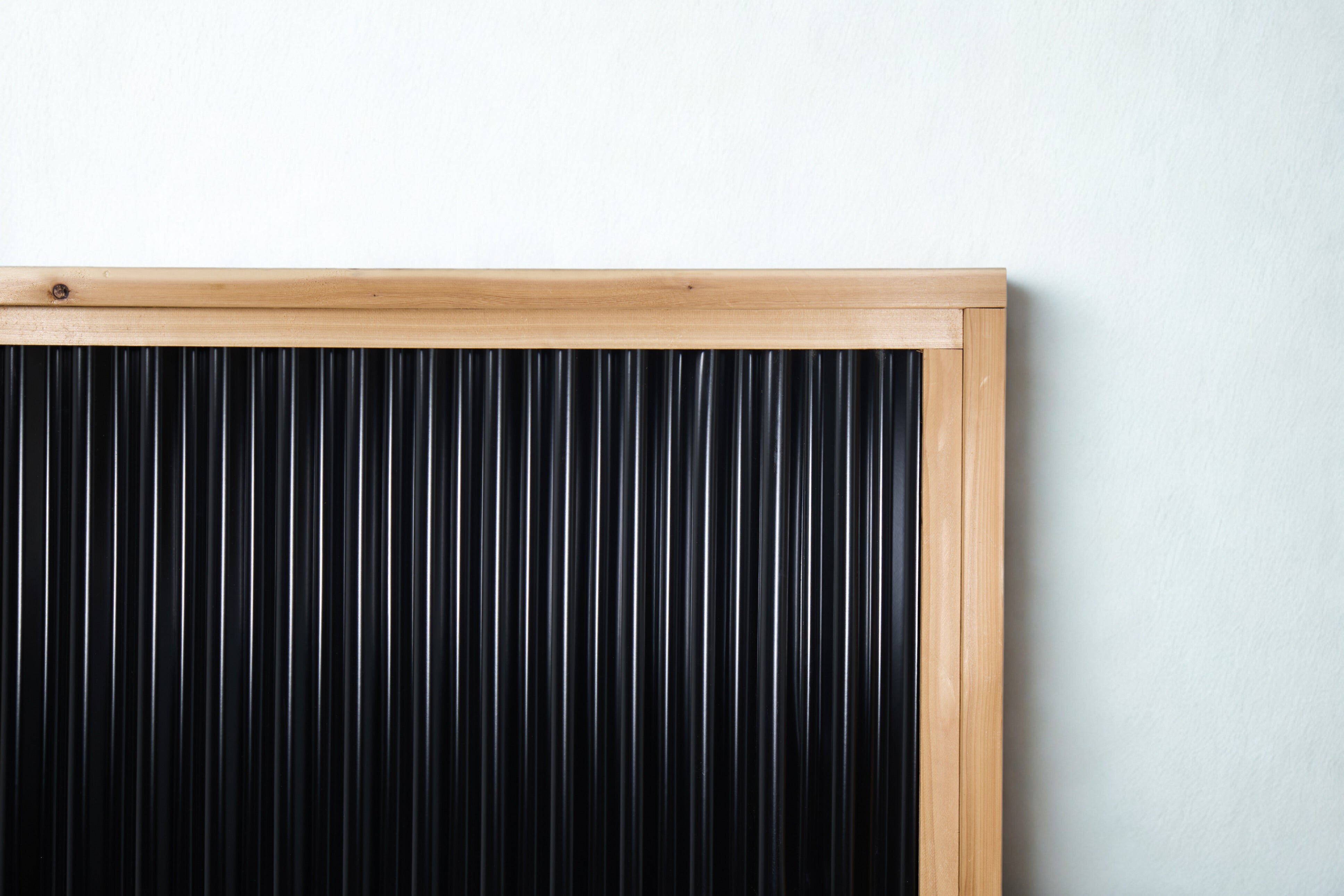
Cedar-Framed Corrugated Metal Fence Panels
The signature mountain modern look. A steel face that won't rot, cup or need stain, wrapped in a warm Western Red Cedar frame that ties the fence to timber beams and decks.
From $358.41 / panel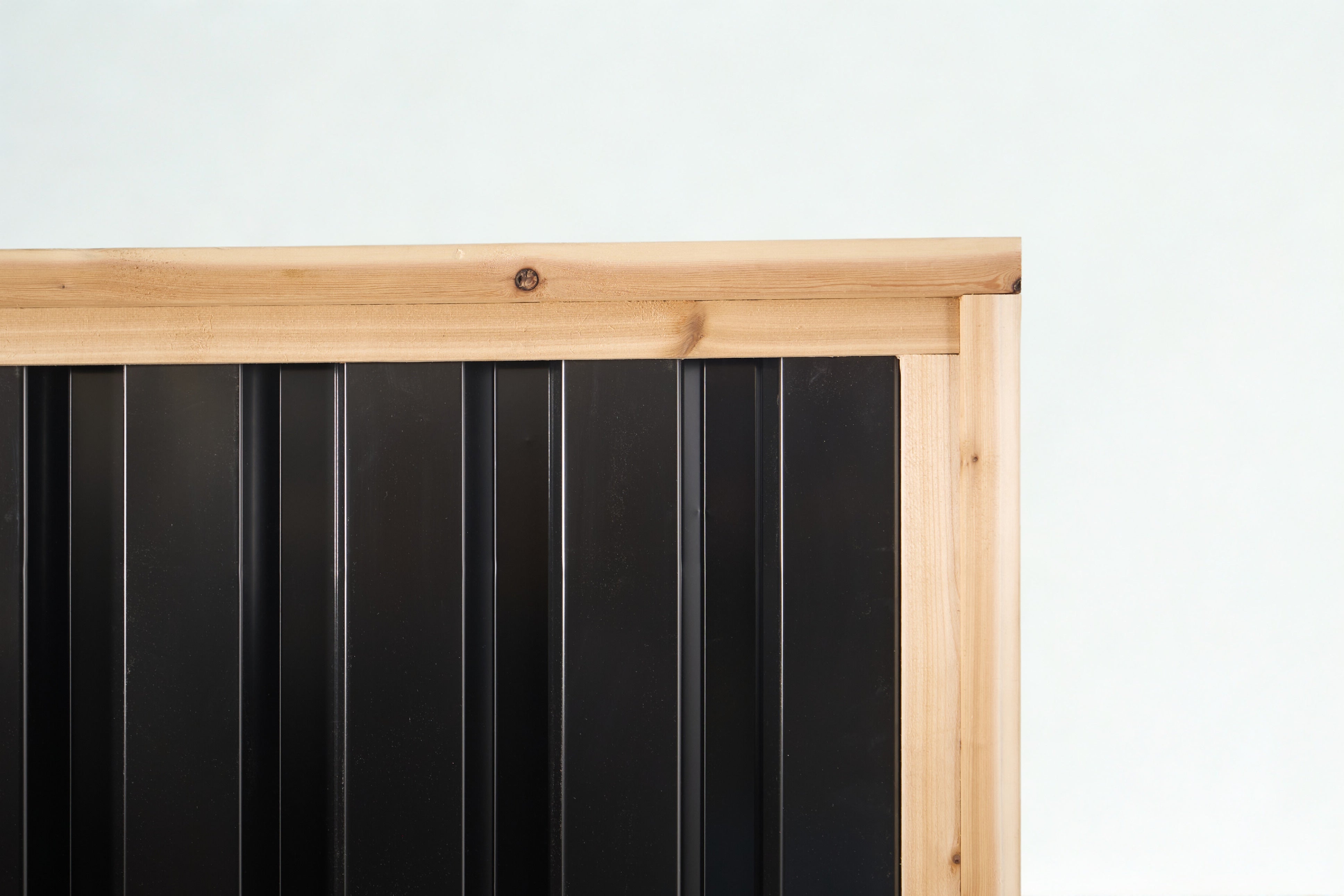
Deep-Groove Ribbed Metal Fence Panels
For contemporary mountain builds. 26-gauge steel with crisp shadow lines, painted on both sides, in Midnight Black, Coffee Brown, Coastal Gray or Corten. 40-year warranty on the steel and finish.
From $329.49
Black Hog Wire Fence Panels
For the view sections. 6-gauge welded steel mesh, galvanized after welding and then dip-coated black. Unframed, or framed in pressure treated wood or Western Red Cedar. 40-year warranty.
From $52.62 / panel
Corten Steel Fence Panels
Weathered steel for snow and stone. Genuine weathering steel that forms its own protective patina and never needs paint. 7/8" corrugated or ribbed, 4' to 8' tall, framed or loose.
From $107.99Shop Fencing
Delivery Across the Lower 48
BarrierBoss ships factory-direct across the lower 48, delivered and unloaded. Read the full delivery page for transit times, returns, and damage handling.
More From the BarrierBoss Style Guides
Sources