

Fire-Resistant Fence Ideas That Actually Look Beautiful

BarrierBoss Style Guide ·
8 Fire-Resistant Fence Ideas for a Beautiful, Wildfire-Ready Yard
A fire-resistant fence doesn't have to look like a compromise. The fences that hold up best in wildfire country are made of steel, and steel happens to be one of the cleanest, most modern materials you can put around a home. This guide shows how to design a fence that looks great, keeps fire away from the house, and matches the latest wildfire guidance for the area closest to your walls.

What You Need to Know (TL;DR)
- Wood fences can carry fire straight to a house. After the 2021 Marshall Fire in Colorado, IBHS researchers found that wood privacy fences acted as pathways for flames between homes.
- The 5 feet around your home matters most. The IBHS Wildfire Prepared Home standard calls for only noncombustible fencing, posts and gates in that zone, such as steel or concrete. Vinyl, composite and fire-rated coatings don't qualify.
- California adopted statewide "Zone 0" rules in August 2026, but they are not in effect yet, and some cities and counties already have their own. Parts of Colorado regulate fencing near homes too. Check your local rules before you build.
- Design the fence in zones: all-metal near the house, then open hog wire or framed panels farther out, with gravel or pavers along the base.
- Steel won't burn, rot or need stain, and it comes in black, brown, gray, silver, cream and Corten, so you don't have to choose between safety and style.
Why Your Fence Matters in a Wildfire
Most homes lost to wildfire aren't reached by a wall of flame. They catch from embers, small burning debris carried ahead of the fire, landing on something burnable close to the house. A wood fence is one of the most common burnable things sitting right against a home.
That's what investigators saw after the Marshall Fire, which destroyed more than a thousand homes in Boulder County, Colorado, in December 2021. Researchers from the Insurance Institute for Business & Home Safety (IBHS) found that wood privacy fences acted as pathways, carrying flames from yard to yard and into houses. In their lab tests, fences attached to a home burned like matchsticks pointed straight at the wall.
The fix is simple in principle: anything that touches or sits close to the house should be made of something that can't burn. For fences, that means metal. Steel fence panels, posts and gates are noncombustible, so they won't ignite from embers and won't act as a fuse. They also stay straight, need no stain and carry a 40-year warranty from BarrierBoss. Browse our full range of metal fencing to see what's possible.
Fire-Resistant vs. Noncombustible: What the Guidance Says
"Fire-resistant" gets used loosely. In wildfire guidance, the word that matters is noncombustible, meaning the material won't burn at all. Products sold as fire-rated, fire-retardant or Class A can still burn, and a fire-rated coating on wood doesn't make it noncombustible.
The IBHS Wildfire Prepared Home standard
IBHS runs the Wildfire Prepared Home program, a standard for making existing homes more resistant to wildfire. For the 5 feet around the house, its checklist is direct: remove all combustible fencing, including posts and gates, and use only noncombustible materials such as metal or concrete. It specifically says vinyl, composite and fire-rated coatings are not acceptable.
California's Zone 0 rules
California's Board of Forestry adopted statewide "Zone 0" rules for the ember-resistant zone within 5 feet of homes on August 19, 2026. As of this writing they still need final state approval, and CAL FIRE describes Zone 0 as recommended but not legally required yet. Under the adopted text, combustible fences and gates could not attach to a home, a fence that attaches or comes close would need a 5-foot noncombustible section, and existing homes would get several years to comply. Some cities, including San Diego, already have their own Zone 0 rules, so check with your local fire department or building office.
Colorado and the rest of the West
Colorado's statewide Wildfire Resiliency Code is being put in place by counties and towns in wildfire-risk areas. Garfield County, for example, requires fencing within 8 feet of a structure to be noncombustible or ignition-resistant in its wildfire hazard areas. Other Western states and fire districts set their own rules, and many HOAs in fire-prone areas do too. Our non-combustible fencing checklist for the Western U.S. walks through planning the fence line in more detail.
How to Plan a Fire-Resistant Fence by Zone
Wildfire guidance divides the space around a home into zones by distance. Plan the fence the same way, and you can keep the strictest materials where they matter and still have plenty of design freedom farther out.
| Zone | Distance from the house | Fence approach | At the base |
|---|---|---|---|
| Zone 0 | 0 to 5 feet | All metal: steel panels, steel posts and a steel gate. No wood frames. | Gravel, pavers or concrete. No mulch or plants against the fence. |
| Zone 1 | 5 to 30 feet | Metal is still the safest choice. In parts of Colorado, noncombustible fencing is required out to 8 feet. | A gravel strip along the fence, with low, well-watered, well-spaced plants. |
| Zone 2 | 30 to 100 feet | More freedom. Open hog wire or framed panels work well here. | Keep grass mowed and clear leaves and debris from the fence line. |
Zone distances follow CAL FIRE's defensible space zones. Your local rules may differ, so confirm before you order.
Design Rules for a Fire-Ready Fence That Looks Good
A fire-resistant fence still has to look like it belongs. These principles keep it from feeling like a safety feature bolted onto the yard.
- Match the house, not the hazard. Pick the panel color from your roof, window frames or trim. Black and Coffee Brown suit most modern and rustic homes, gray suits stucco and stone, and cream suits Spanish and Mediterranean styles.
- Make the transition intentional. If the fence changes from solid to open farther from the house, change it at a post, a gate or a corner so it reads as a design choice.
- Treat the base as part of the design. A clean gravel or paver border along a metal fence looks sharp and keeps burnable debris away from the bottom of the panels.
- Keep the gate in the same family. A steel gate in the same profile and color as the fence makes the whole line look custom.
The profile sets the mood. The 7/8" corrugated wave feels relaxed and works on ranch, farmhouse and rustic homes. The deep-groove ribbed profile has flat faces and crisp shadow lines for contemporary architecture. Our comparison of ribbed vs. corrugated metal fence covers the differences.

8 Fire-Resistant Fence Ideas
1. A full-metal black privacy fence
The cleanest answer for privacy in wildfire country. Our black metal privacy fence kit pairs steel posts and rails with corrugated steel panels, so there is no wood anywhere in the fence. The panels are 26-gauge galvanized steel with NoFade paint and DualCoat on both sides, so the color holds on your side and the neighbor's.
2. A 5-foot metal section where the fence meets the house
If you already have a fence you like, start where it matters most. Replace the section that attaches to the house, plus at least the first 5 feet, with steel posts and panels. Finish the change at a post or gate so the new section looks planned. This is the approach California's adopted Zone 0 rules point toward, and it's the most fire protection you'll get per foot of fence.
3. A matching steel gate at the side yard
Side-yard gates usually sit right beside the house, so they're one of the first things to replace. BarrierBoss metal gates come in welded steel frames with corrugated, ribbed or hog wire infill, as single walk gates or double swing gates, so the gate can match the fence exactly.
4. Open hog wire in a steel frame for the views
Not every fence needs to be solid. Where you want to keep a view or let air move through, rigid 6-gauge hog wire in a steel frame gives you a boundary without blocking the landscape. The black hog wire fence kit comes with steel posts and rails, and the wire is hot-dipped and heavy galvanized, then dip-coated black. Open mesh also makes it easy to see and clear leaves that collect along the base.
5. Corten and gravel for a desert modern look
Weathered steel is as noncombustible as painted steel, and it brings warm rust tones that suit desert and Southwestern homes. Pair Corten steel fence panels with decomposed granite, boulders and spare desert planting for a look that is fire-wise by design. Our Corten fence ideas guide has more pairings.
6. Ribbed steel for a contemporary home
For flat roofs, stucco and big glass, deep-groove ribbed panels give a sharper, more architectural line than corrugated. Set them on metal fence posts so nothing at the ground line can rot or burn. Midnight Black or Coastal Gray suit most contemporary palettes.
7. Stone or block piers with steel infill
For a front-yard fence or an entrance, have a mason build stone or concrete block piers and set steel panels or a metal gate between them. Masonry and steel are both noncombustible, and the combination looks substantial and permanent, like part of the original architecture.
8. A metal fence with a gravel border
The ground along a fence matters as much as the fence. Run an 18- to 24-inch band of gravel or pavers along the base of a metal fence, edged in steel or stone. It looks clean and intentional, keeps mulch and dry leaves off the bottom of the panels, and gives you a path to walk the fence line and clear debris.
Fire-Wise Landscaping Along the Fence Line
A noncombustible fence works best with noncombustible ground around it. The IBHS standard calls for the first 5 feet around the home to be free of vegetation, mulch and other combustible items, and that applies to the fence line within that zone too.
- 0 to 5 feet: gravel, rock, pavers or concrete. Skip bark mulch, artificial turf and plants against the fence. Containers, if any, should be noncombustible and hold well-watered plants.
- Farther out: low, well-watered plants with space between them. Your state extension office or local fire district can recommend fire-resistant plants for your area.
- All year: rake leaves and pine needles away from the base of the fence, and never stack firewood, lumber or patio cushions against it.
Fire-Resistant Gates, Posts and Hardware
A fence is only as fire-resistant as its weakest part. Wood posts or a wood gate in an otherwise metal fence give fire a way through, and the IBHS checklist specifically includes posts and gates in its 5-foot rule.
- Posts: use steel posts set in concrete for any section near the house.
- Gates: match the gate to the fence in steel, and make sure it closes fully so wind-blown debris can't pile up behind it.
- Hardware: steel hinges and latches. Avoid plastic latch covers and decorative wood trim near the house.
Browse all fence gates to find one that matches the rest of your run.
- Wood or vinyl attached to the house. A combustible fence that touches the house can carry fire straight to the wall. This is the single most important thing to change.
- Counting on fire-rated coatings. The IBHS standard doesn't accept fire-retardant coatings on wood as a substitute for noncombustible materials.
- Wood-framed panels within 5 feet. Cedar or treated frames look great, but save them for sections farther from the house.
- Mulch, bamboo screens and artificial hedges along the fence. They all burn, and they turn a metal fence back into a path for fire.
- Assuming a product label settles it. Wildfire rules vary by state, county and city. Confirm what applies at your address before you build.

Frequently Asked Questions
What is the most fire-resistant fence material?
Steel, along with masonry and concrete. All three are noncombustible, so they won't ignite from embers or carry fire to the house. Of the three, steel is the easiest to install and the most flexible for design, with solid, ribbed and open hog wire options.
Is a metal fence fire-resistant?
No fence is fire-resistant, and steel can't stop a wildfire on its own. What a steel fence won't do is burn, so it won't catch embers or act as a fuse leading fire to your home. It works best as part of a whole plan that includes a clear 5-foot zone around the house.
Are vinyl or composite fences fire-resistant?
Not by wildfire standards. Vinyl and composite can melt, burn and drip, and the IBHS Wildfire Prepared Home standard doesn't accept them within 5 feet of the house.
Does California require metal fences near homes?
Not statewide yet. The Board of Forestry adopted Zone 0 rules in August 2026, but they still need final state approval, and existing homes would get a phase-in period once they take effect. Some cities, including San Diego, already have their own rules, so check with your local fire department.
Do I have to replace my whole wood fence?
Usually not. The biggest gain comes from replacing the part that attaches to the house and the first 5 feet out with steel posts and panels. Sections farther from the house matter less, though metal is still the safer choice.
Will a metal fence lower my home insurance?
It can help as part of a broader effort. In California, some insurers offer discounts for wildfire mitigation, including homes with an IBHS Wildfire Prepared Home designation, which requires noncombustible fencing within 5 feet. Ask your insurer what they recognize.
Build a Fence That Won't Feed a Fire
BarrierBoss full-metal fence kits pair steel posts and rails with corrugated, ribbed or hog wire infill, in black, brown, gray, silver, cream and Corten, with matching steel gates. Nothing to burn, rot or stain, and a 40-year warranty on the steel and finish.
Shop the Privacy Kit → Shop Metal Gates → Size Your Project →
Factory-direct pricing, delivered and unloaded on our own trucks. See delivery details
Shop These Products

Zero-Maintenance Black Metal Privacy Fence Kit
All metal, nothing to burn. Steel posts, rails and corrugated steel panels with NoFade paint and DualCoat on both sides. Posts, panels, rails and hardware included. 40-year warranty.
From $586.10 / kit
Zero-Maintenance Black Hog Wire Fence Kit
Open and all metal. 6-gauge welded wire, hot-dipped and heavy galvanized, then dip-coated black, in a steel frame with steel posts included. Keeps the view and has nothing to burn.
From $569.99 / kit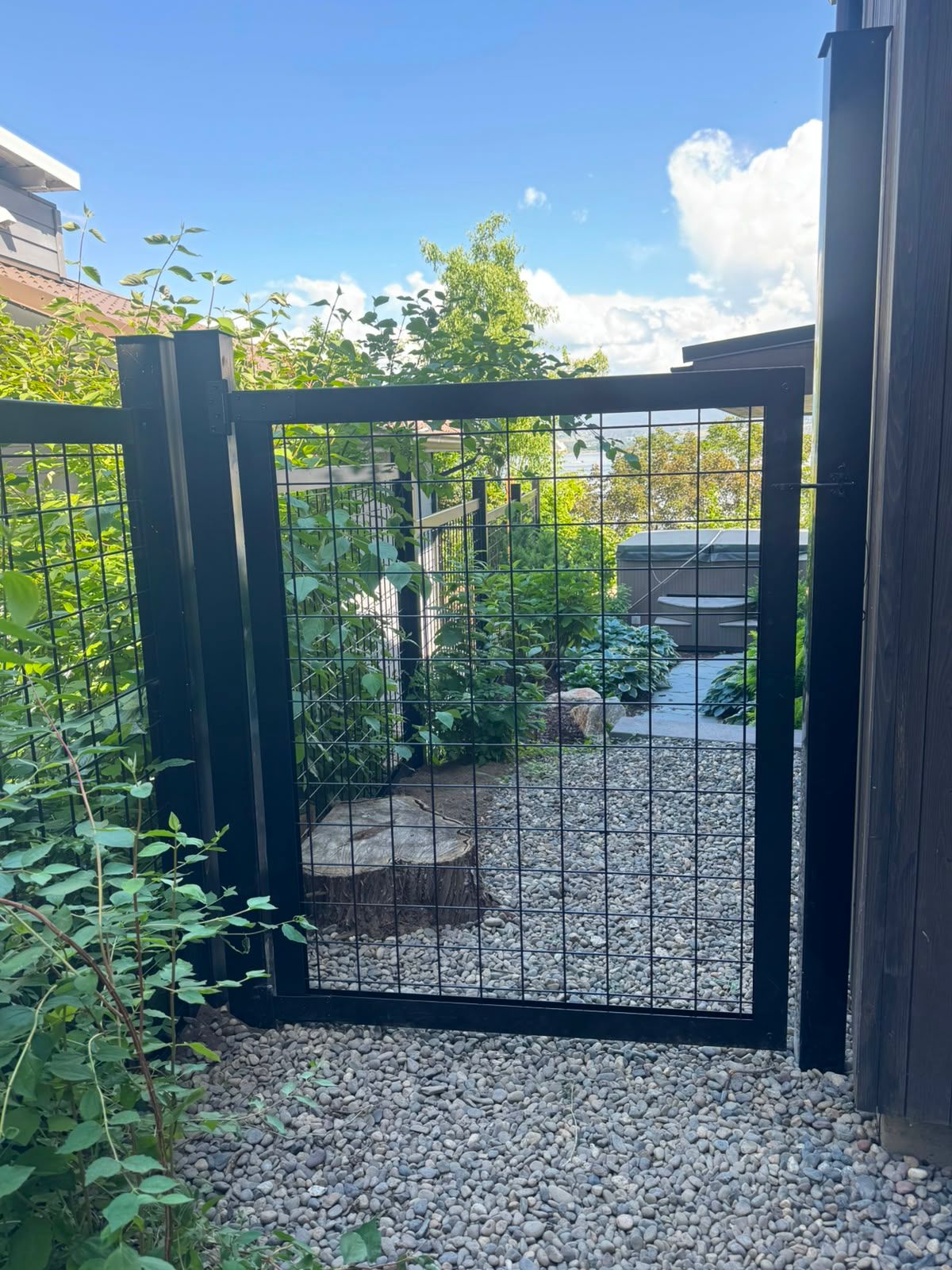
Zero-Maintenance Metal and Steel Gates
The side-yard upgrade. Welded steel frames with corrugated, ribbed or hog wire infill, as 4' walk gates or 12' double swing gates, in colors to match your fence.
From $416.66 / gate
Corten Steel Fence Panels
Warm, weathered and noncombustible. Genuine weathering steel that forms its own protective patina and never needs paint. 7/8" corrugated or ribbed, framed or loose.
From $119.99 / panelShop Fencing
Delivered and Unloaded by Our Crew
BarrierBoss ships factory-direct on our own trucks, delivered and unloaded on your property. Read the full delivery page for transit times, returns and damage handling.
More From the BarrierBoss Style Guides
More on Fire-Resistant Fencing
Sources